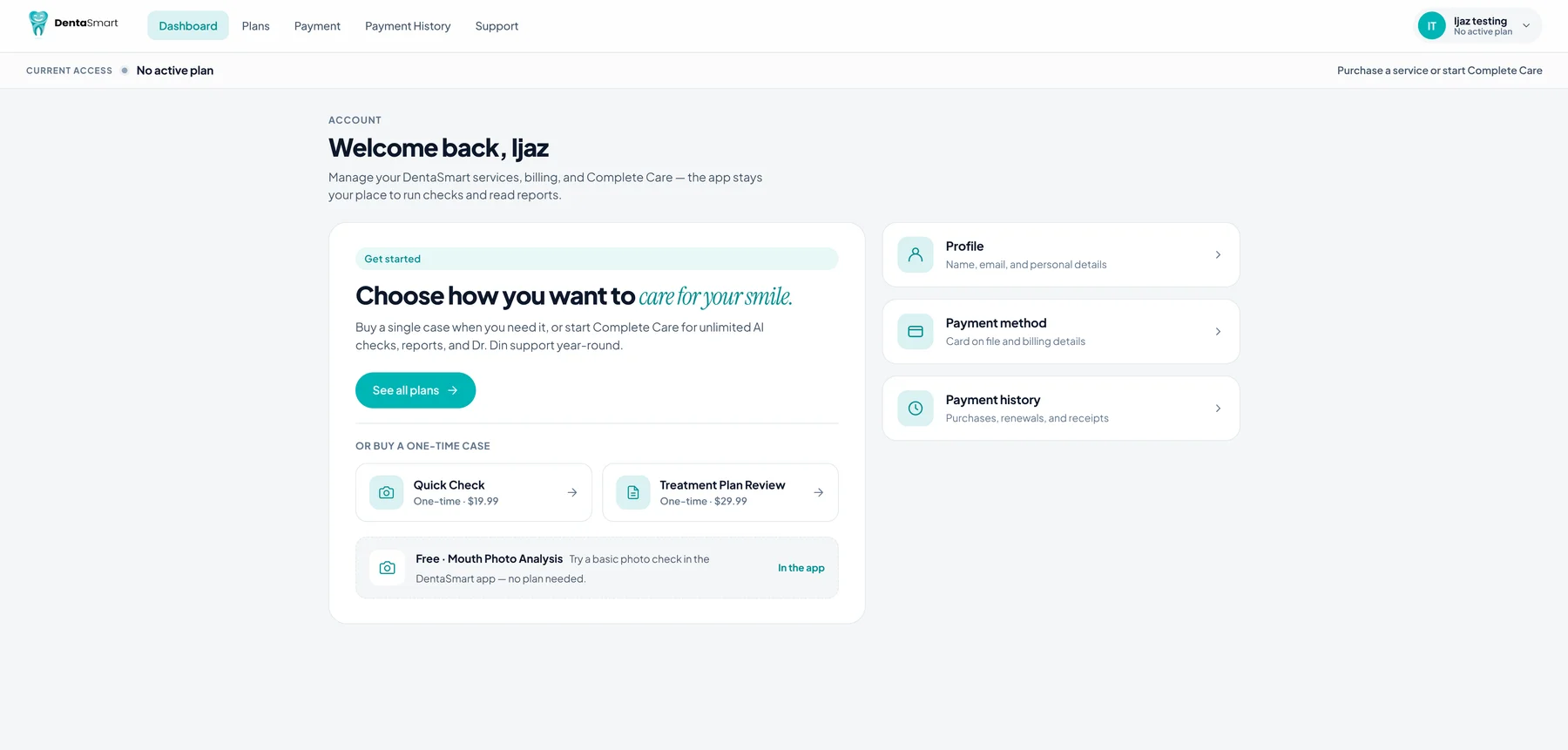
DentaSmart is an AI dental-health product with web applications, backend services, subscriptions and AI integrations. My work on the product is part of my full-stack developer role at Zigron Pakistan.
My role and responsibility
I handle the product's backend and web applications, including subscription functionality and AI integrations. The product uses microservices, so my responsibility spans the services and the web workflows that depend on them.
This is ongoing product development within the Zigron team. The case study describes my engineering responsibilities; it does not attribute the entire company's work or clinical results to me.
Product status and what can be shown
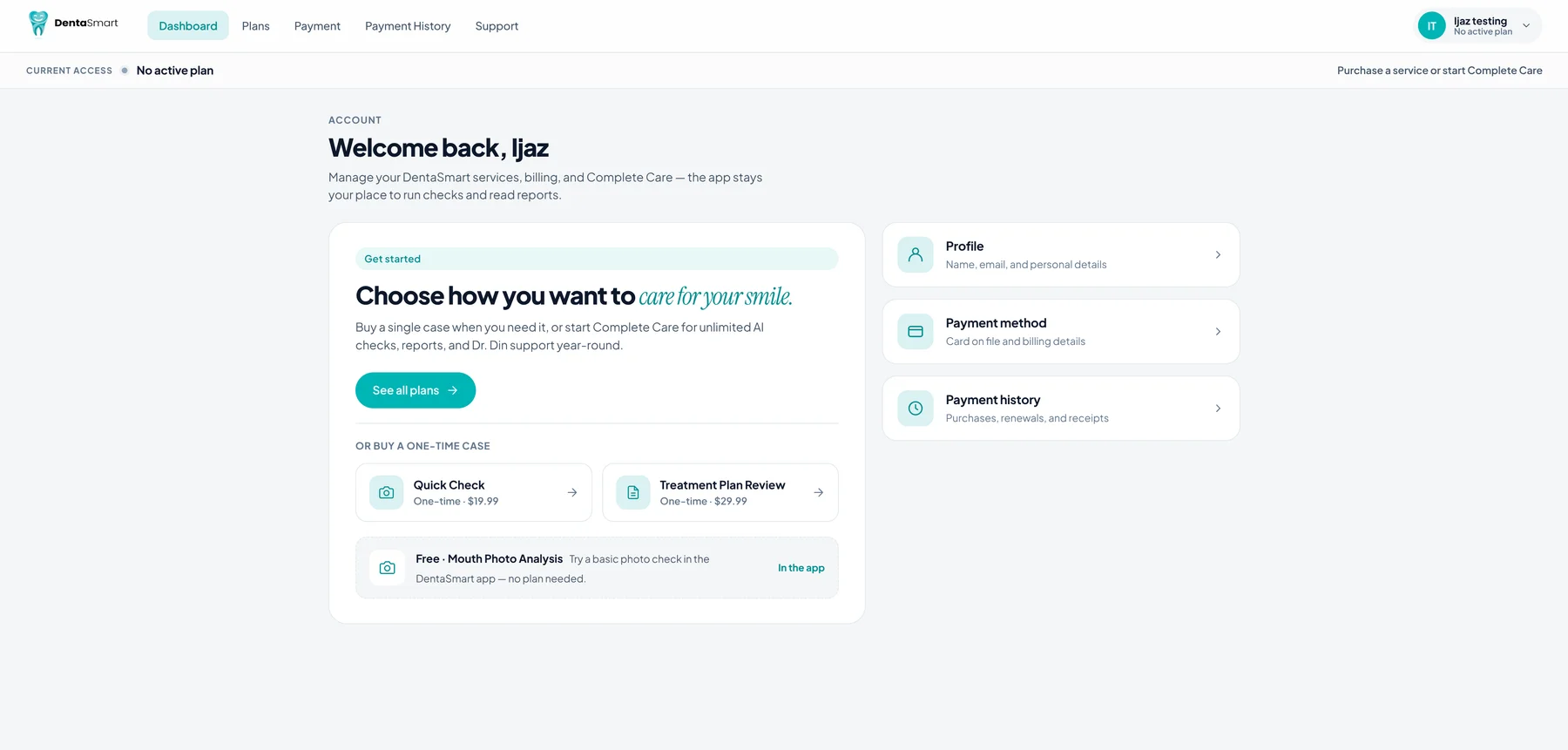
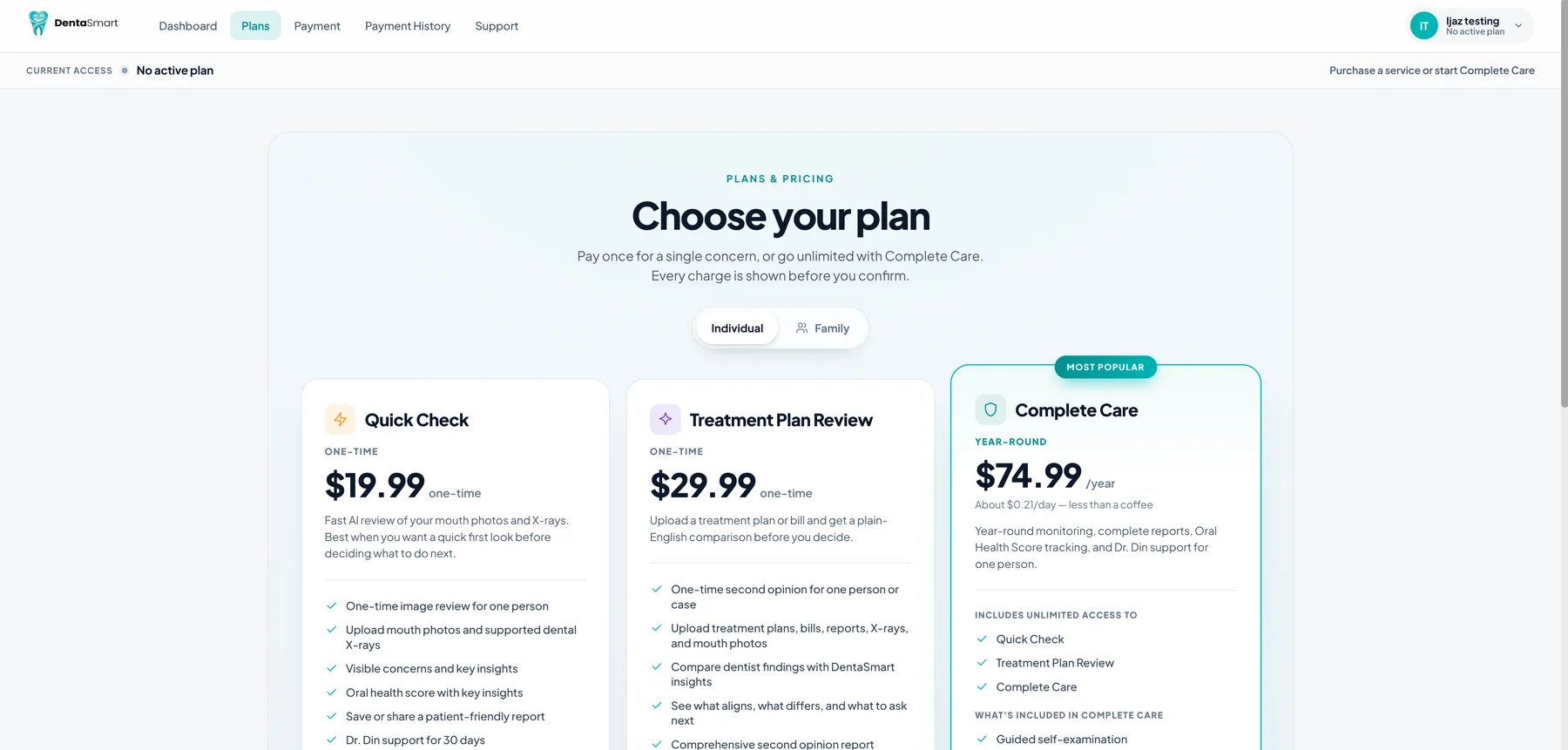
The web application is still in development and is not publicly live. My responsibilities include its backend, web applications, subscriptions and AI integrations; those responsibilities should not be read as a claim that the web portal has launched.
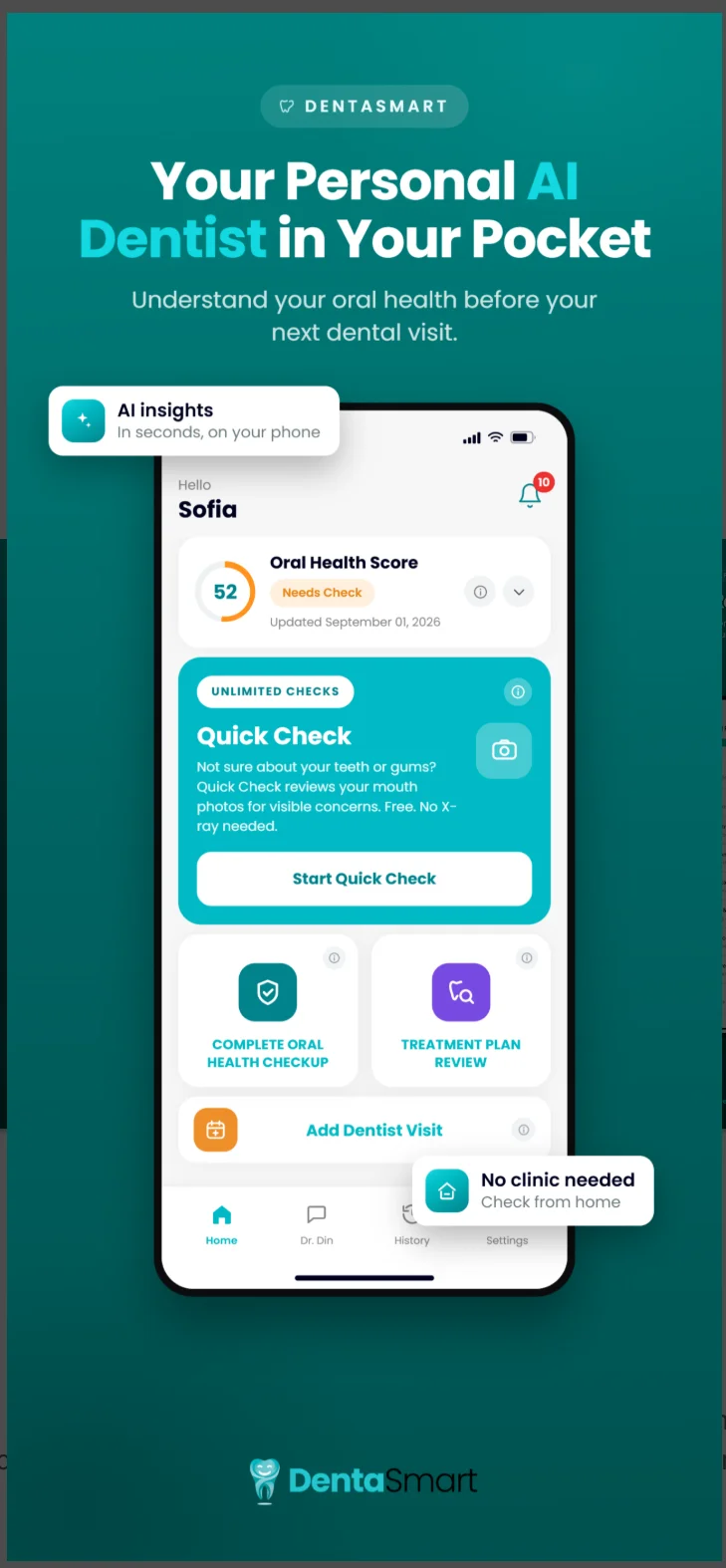
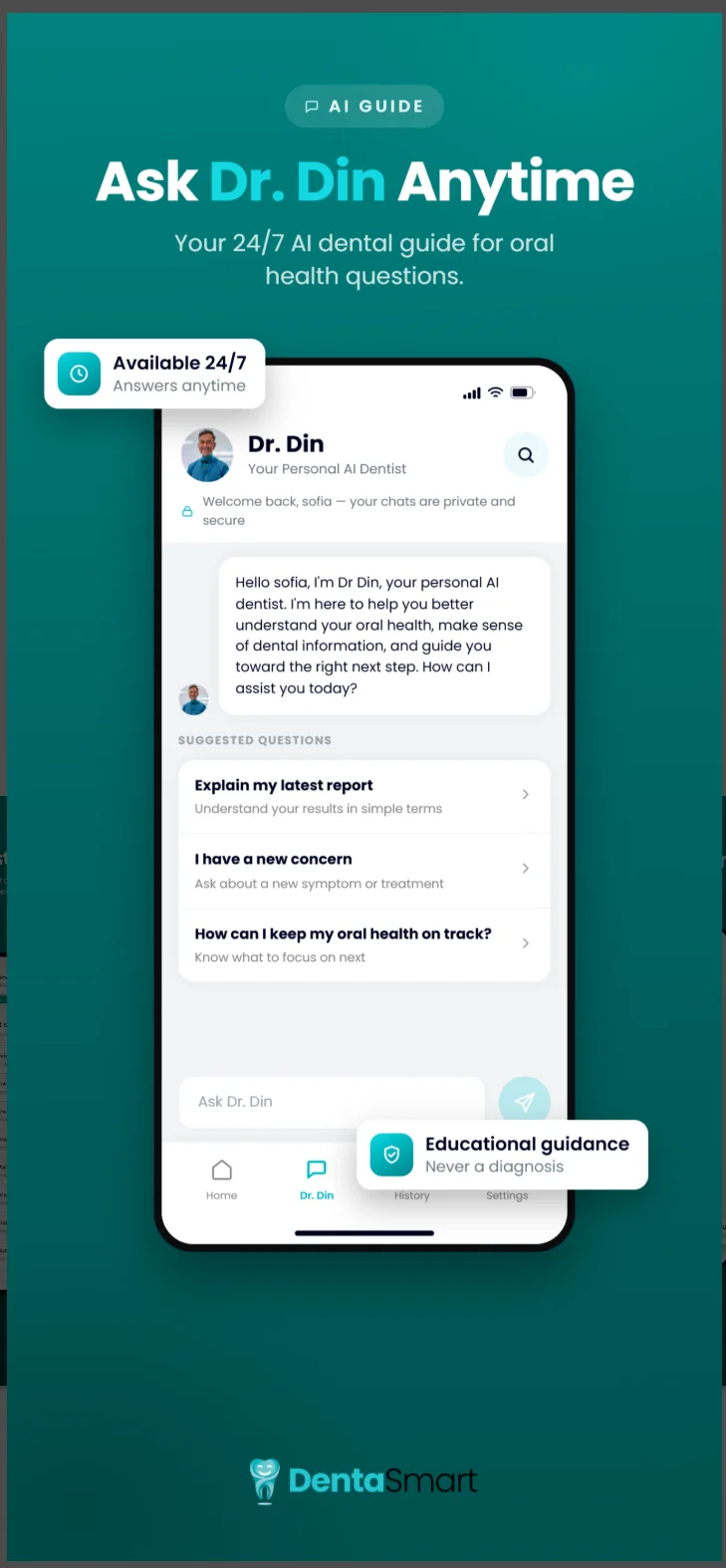
The supplied mobile promotional screens show the wider product context, not proof that I designed or implemented the entire mobile app. The owner has approved the supplied web and mobile images for public use; the web screens are shown as pre-release previews. Internal and dentist-only dashboards are excluded because they are not approved for public sharing.
Connecting product workflows across services
Backend changes need to reach the web application as usable workflows. My work covers both sides of that connection: the services that support a feature and the application through which a user interacts with it.
In a microservices product, that also means considering the interfaces between services. A change to an API, subscription workflow or AI integration needs to fit the other parts of the product rather than becoming an isolated feature.
Subscriptions and AI integration
Subscriptions are part of the product functionality I handle, alongside the backend and web applications. This work connects the commercial side of the SaaS to the application users access.
I also handle AI integrations within the product. The responsibility described here is integrating AI capabilities into the application and its services. It is separate from claiming authorship of every underlying model or claiming clinical validation.
What this work demonstrates
- Full-stack responsibility across backend services and web applications.
- Work within an existing microservices product rather than only a standalone prototype.
- Subscription functionality integrated with the product backend and web applications.
- AI integration connected to application workflows.
- Ongoing engineering within a product team.
For a similar product
If your SaaS needs backend work, subscription functionality or an AI integration, the first conversation should establish the existing architecture, the workflow you want to change and how the change will be accepted.
Explore backend engineering, subscription development or AI integration, or discuss your product.
Inside the product
Supplied product screens, with sensitive records removed where noted. Select an image to inspect the full-size version.